Women's Wellness: Supporting Health at Every Stage of Life
A guide to understanding women's nutritional needs, building healthy habits, and supporting everyday well-being.
Read article
The documentation to review before entering a new market.
Entering a new market is an exciting opportunity for any health and wellness distributor. However, successful international expansion requires more than choosing the right products, negotiating competitive prices, and establishing retail partnerships.
One of the most important steps is understanding the technical dossier — the collection of documents that helps distributors evaluate a product's composition, quality, safety, and regulatory suitability.
For distributors working with nutritional supplements, effervescent tablets, and women's wellness products, a well-organized technical dossier can simplify product evaluation, support regulatory submissions, and reduce costly delays.
At OUDERA, we believe that successful distribution partnerships begin with transparency, preparation, and a shared commitment to quality.
A technical dossier is a structured collection of product-related documentation used to support quality assessment, regulatory review, and market-entry preparation.
Depending on the country, product classification, and local authority requirements, the dossier may include:
Important: A technical dossier is not automatically a product registration or marketing authorization. Each country may require different documents, formats, translations, notifications, or approvals.
Before introducing a supplement into a new market, distributors should review the complete product formulation.
This includes identifying the active ingredients, their quantities per serving, the recommended daily intake, and any relevant excipients or additives.
Different markets may establish different rules for acceptable ingredients, permitted vitamin and mineral forms, maximum levels, and product classification.
For example, an ingredient accepted in one country may be restricted or subject to additional requirements in another.
What distributors should verify:
Reviewing these details early can help avoid unexpected reformulation or labeling changes.
Product quality is a critical consideration when selecting an international supplement partner.
Distributors should understand where products are manufactured, which quality systems are in place, and how manufacturing consistency is controlled.
Depending on the market and product, relevant documents may include Good Manufacturing Practice (GMP) evidence, manufacturing licenses, facility information, and recognized quality-management certifications.
Certificates should always be reviewed for their validity, scope, issuing organization, and relevance to the actual manufacturing site.
A quality certificate should never be treated as proof of market authorization unless the competent authority explicitly recognizes it for that purpose.
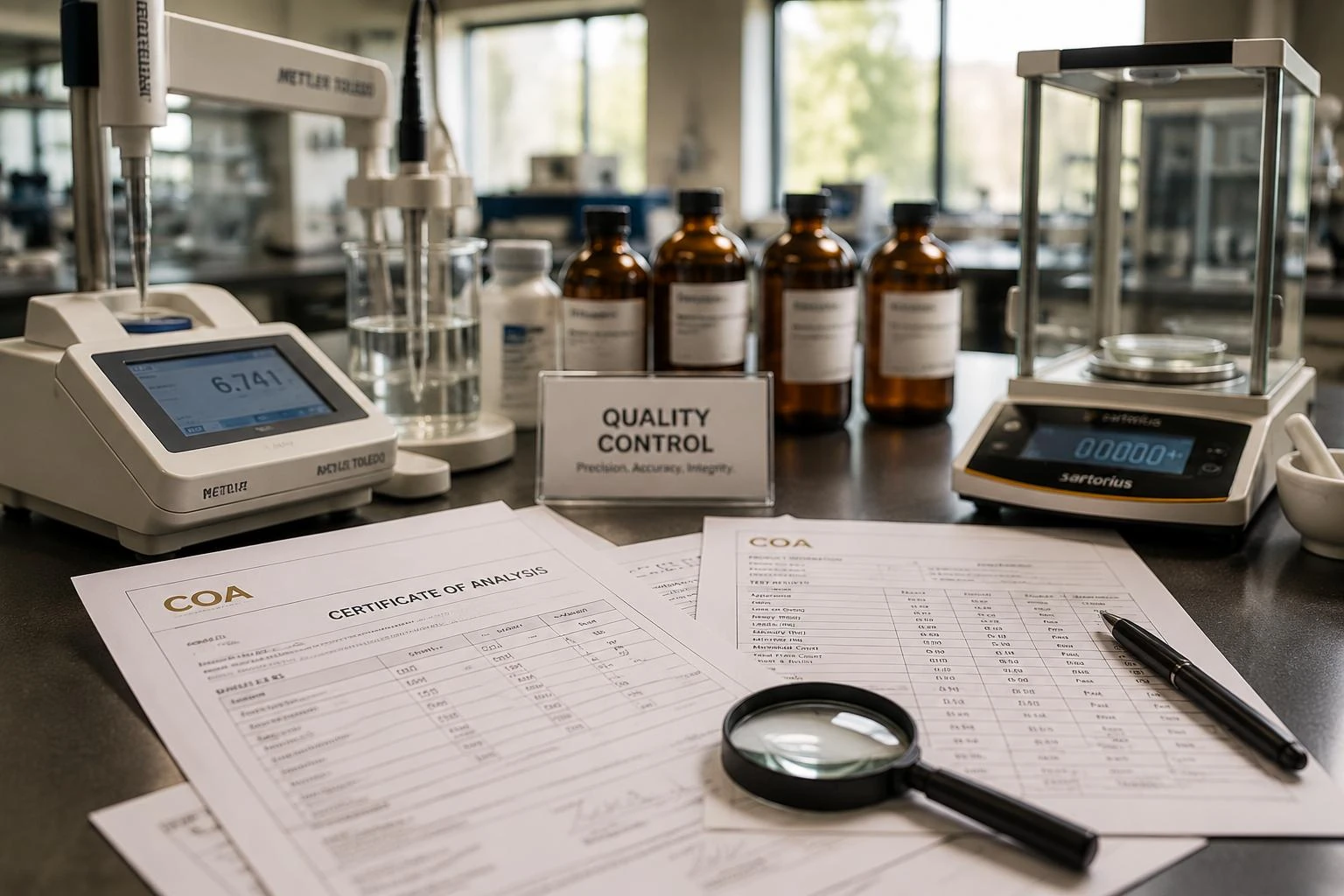
A Certificate of Analysis is one of the most useful documents for assessing whether a particular production batch meets established specifications.
Depending on the supplement and its risk profile, testing may address:
Distributors should confirm that the COA identifies the relevant product and batch, includes appropriate test methods and acceptance limits, and provides traceable results.
A generic product specification is not a replacement for batch-specific testing documentation when such evidence is required.
Shelf life is particularly important for products intended for international shipment.
Changes in temperature, humidity, storage conditions, and transport duration can affect product quality over time.
For effervescent supplements, moisture protection and packaging integrity deserve particular attention because exposure to humidity can affect tablet performance.
Distributors should review available stability data, the proposed shelf life, recommended storage conditions, and the packaging configuration used to support those conclusions.
This information helps businesses assess whether products are suitable for the destination market's climate, logistics, and retail environment.
Even when a supplement is suitable from a formulation perspective, its label may need adaptation before entering a particular market.
Requirements can vary regarding language, ingredient declarations, nutrient information, warnings, responsible-business details, and permitted marketing claims.
A health-related statement permitted in one jurisdiction may not be acceptable in another.
Distributors should carefully review:
Final packaging should be approved against the destination country's applicable requirements before commercial printing or shipment.
There is no single technical dossier that guarantees automatic access to every international market.
Regulatory requirements differ between countries and may also depend on whether a product is classified as a food supplement, conventional food, medicine, or another regulated category.
Some markets require product notification or registration before sale. Others place greater responsibility on manufacturers and importers to ensure compliance without routine premarket product approval.
For this reason, distributors should work with local regulatory professionals or the appropriate authorities to determine the exact market-entry pathway.
The key principle is simple: product documentation must be reviewed against the rules of the destination market, not only those of the manufacturing country.
Before committing to a new market launch, distributors should confirm the following:
Completing this review before placing a substantial commercial order can help reduce delays, unexpected costs, and compliance risks.
Technical documentation is more than an administrative requirement. It is an important part of building trust between manufacturers, brand owners, and distribution partners.
Clear communication about available documentation, regulatory responsibilities, timelines, and product specifications helps both parties prepare for a sustainable commercial relationship.
For brands operating internationally, transparency and organized document management also support more efficient communication with importers, regulatory consultants, and local authorities.
Entering a new market requires careful planning, but the right preparation can make the process more predictable.
A thorough technical dossier review helps distributors understand the product, identify regulatory gaps, and make informed decisions before investing in a launch.
At OUDERA, we recognize the importance of product quality, responsible market expansion, and clear communication with international partners.
Exploring a distribution opportunity with OUDERA?
Connect with our team to discuss our product portfolio, market-entry considerations, and documentation availability for your target market.
Disclaimer: This article provides general educational information and does not constitute legal or regulatory advice. Documentation requirements and market-entry procedures vary by jurisdiction, product, and applicable regulations. Distributors should verify requirements with qualified local regulatory professionals and competent authorities.
Back to Blog WOMEN’S WELLNESS
A guide to understanding women's nutritional needs, building healthy habits, and supporting everyday well-being.
Read article WELLNESS PERSPECTIVES
Convenient effervescent nutrition designed to fit modern routines.
Read article FORMULATION NOTES
Discover how effervescent technology transforms nutritional supplements into a convenient, refreshing daily wellness experience.
Read articleConnect with our team to explore our formulations, commercial requirements, and potential distribution opportunities.